

Case Studies
Case Study: Standard Work 2.0™ at a Defense ATE Contract Manufacturer
An in-progress Operations Architect and fractional COO engagement at a greater-Boston builder of automated test equipment: a six-figure software spend decision executed, a CMMC and ITAR data border running, and a multi-million dollar backlog under attack.
Garrett Partridge · July 24, 2026 · 11 min read · Case Study
This case study documents an in-progress engagement in which Garrett Partridge LLC serves as Operations Architect and fractional COO to a greater-Boston contract manufacturer of automated test equipment and fixtures for the Defense Industrial Base. Four initiatives run under one Standard Work 2.0™ program: cost avoidance identified and executed, over $75,000 in bypassed migration fees plus roughly $55,000 in annual license spend, a high-side and low-side data border for CMMC 2.0 and ITAR, workflow engineering against a multi-million dollar backlog and a tier-1 prime's on-time-delivery scorecard, and a four-phase digital thread roadmap. It is written for defense manufacturing executives who want to see what embedded fractional operations leadership actually changes on a regulated floor.
The client, the backlog, and the scorecard
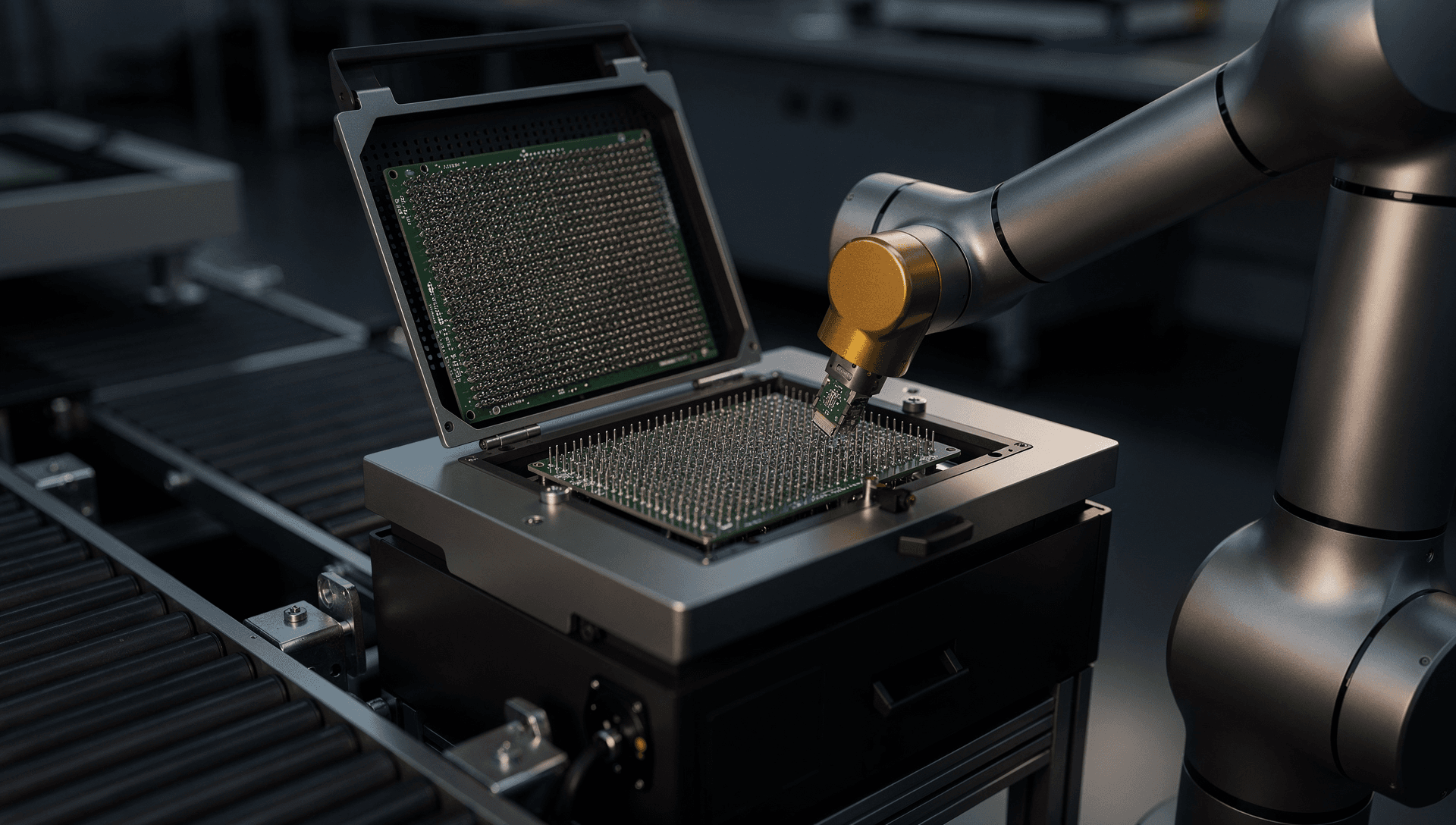
The client is a contract manufacturer of automated test equipment, ATE, and fixtures for highly regulated markets, including the Defense Industrial Base, in the greater Boston area. Their machines are the ones that qualify other manufacturers' hardware: test stations, fixtures, and the harnessing between them, built to print for programs that tolerate zero ambiguity.
Garrett Partridge LLC entered as Operations Architect and fractional COO to run the Standard Work 2.0™ initiative: the operating method that installs documented, followed, measured standard work across the floor and the systems that feed it, so the way work actually happens and the way the systems say it happens are the same thing.
The pressure was concrete. An extensive multi-million dollar production backlog. A major tier-1 defense prime contractor's on-time-delivery scorecard sitting at a critical underperforming rate. An assembly bench halt rate of 25 percent, meaning one build in four stopped mid-assembly waiting for a part, an answer, or a drawing. And a business run on disconnected, tribal-knowledge spreadsheets that no auditor and no prime could trace.
The engagement drove three things at once: rapid digital transformation, defense-grade data compliance, and tech-stack decisions aimed directly at that backlog. The four initiatives below are one program, not four projects.
Engagement in progress. Figures shown are targeted and anticipated outcomes of initiatives currently being implemented, with close-out expected within the next two quarters.
Cost avoidance first: two decisions, both executed
The engagement opened with an audit of the client's existing IT infrastructure, because the fastest money in a turnaround is the money already leaving the building. The audit surfaced two decisions. Both were identified and executed as achieved cost avoidance, and they are the two hard-dollar figures in this study.
First, the migration that got halted. The client was headed into an expensive, inefficient legacy migration to an on-premise Microsoft Project Server. I stopped it and pivoted the company to modern, FedRAMP-compliant SaaS platforms, Smartsheet Gov and OnePlan among them. FedRAMP is the federal government's authorization baseline for cloud services, which matters here because a defense supplier's tooling has to clear that bar anyway. The pivot bypassed over $75,000 in migration fees and landed the company on platforms that already sit inside the compliance posture it needs.
Second, the license bottleneck. The client's ERP ran on 25 floating licenses, and the shop floor was queuing behind the front office to get one. The obvious fix, buying more licenses, carried a price of roughly $55,000 a year, forever. I built a custom data bridge instead: querying the SQL database directly at the server level through SSRS, the reporting service the client already owned, and surfacing the results in low-cost tracking overlays on the floor. Shop floor technicians gained 100 percent data visibility while consuming zero ERP licenses. The annual spend was avoided outright.
- Over $75,000 in migration fees bypassed by halting an on-premise Project Server migration and pivoting to FedRAMP-compliant SaaS.
- Approximately $55,000 in annual ERP license spend avoided by solving a 25-user floating license bottleneck with a custom SQL and SSRS data bridge.
- Full floor data visibility delivered through low-cost tracking overlays, with the ERP's licensed seats left to the people who transact in it.
The cheapest software is the license you no longer need. Both decisions were executed with assets the client already owned: a SQL database, a reporting service, and a floor that needed to see its own data.
A data border for CMMC 2.0 and ITAR
The client holds highly sensitive defense contracts, which means ITAR technical data and Controlled Unclassified Information, CUI, live in its systems. The usual response is to slow everything down and wrap the whole enterprise in the audit scope. I engineered a Data Border Strategy instead, built to protect the contracts while the floor keeps its speed.
The architecture divides the enterprise into two sides. The high side is a secure sovereign enclave, Microsoft 365 GCC High, the PDM system, and the ERP, and it holds the ITAR blueprints and the CUI. The low side is a visual scoreboard layer for high-speed project portfolio management: schedules, statuses, and priorities the floor and the front office run on all day.
Two controls make the border real rather than aspirational. A zero-file-upload policy acts as a strict behavioral firewall on the commercial tools: no engineering models and no CUI ever land on low-side servers, which sharply shrinks the CMMC 2.0 assessment scope, because systems that never touch CUI stop being assessment targets. And an obfuscated pivot identifier schema, a non-sequential primary key system of my own design, links high-side engineering data with low-side floor dashboards without exposing proprietary customer names or military program details on the side where they would count as a spill.
The border runs between systems, not between people. Engineers work at full speed on the high side, the floor reads its scoreboard on the low side, and a non-sequential key ties the two together without carrying one controlled fact across.
Attacking the backlog and the prime's scorecard
A backlog is not a demand problem. It is a flow problem, and this one was measured publicly: the tier-1 prime's on-time-delivery scorecard graded the client at a critical underperforming rate every month. The workflow engineering in this initiative targets the scorecard directly, because that scorecard is the document the prime's supply chain managers read before awarding the next package of work.
- Automated quality and SCAR alignment. I rebuilt the internal quality tracking to mirror the prime's Supplier Corrective Action Report scorecard exactly, restricting defect data to strictly customer-facing categories such as Incoming Inspection Failure and Quality Escape. Management now walks into monthly reviews with instant, accurate reporting in the prime's own language.
- Ghost parts down 10 percent. Ghost parts are inventory the system says exists and the shelf says does not. A Customer-Furnished Equipment protocol now aligns the Sales and Receiving departments on every CFE item, systematically eliminating the major inventory variances that were feeding the halt rate.
- Bench halts under attack. An automated Teams tagging protocol broadcasts every build stop in real time to the people who can clear it, and mandatory kit verification confirms the kit is complete before a technician opens it. Together they target a major reduction in the 25 percent assembly bench halt rate.
The scorecard is the prime's instrument, so the fix speaks the prime's language: the same SCAR categories, the same defect definitions, read off the client's own systems in real time instead of reconstructed at month end.
The digital thread, and the twin it is building toward
Underneath the backlog sat the real disease: disconnected spreadsheets holding tribal knowledge, each one a single point of failure with a person's name on it. The replacement is an automated, enterprise-wide digital thread, a connected data spine where a fact entered once flows to every record that depends on it.
The build uses a complete cross-sheet relational database architecture on FedRAMP-authorized tools. The system generates unique project IDs automatically, copies rows between sheets without human hands, and uses data mesh tooling to push dynamic information back to the original records, flipping project statuses with zero manual copy-paste. Every status a manager reads is the status the floor actually produced.
The roadmap runs four phases: integrating the core ERP, Smartsheet Gov, and OnePlan into an Azure Government SQL Data Lake. That architecture is the groundwork for a working digital twin of the factory, and for predictive orchestration on top of it, using Microsoft Copilot to run real-time resource simulations, such as re-leveling the factory floor the moment a key technician calls out. The twin is a roadmap deliverable, stated here as the plan it is, with the foundation phases in build now.
What a fractional COO changes, in practice
Read the four initiatives as one system and the pattern is visible. The cost line funds the build. The data border makes the build compliant. The floor cadence makes the build move product. The digital thread makes the build permanent, so it holds after the fractional engagement steps back. That is what Standard Work 2.0™ means in practice: the standard is in the workflow, not in a binder.
The engagement is live. The two software decisions are executed cost avoidance. The scorecard, halt-rate, and digital twin outcomes are targeted and anticipated, in the client's own words, with close-out expected within the next two quarters. This study will be updated when it closes.
The full method behind the program is documented at Standard Work 2.0, and the engagement models this work runs under, the 30-Day Operational Triage and the Fractional COO retainer, are laid out plainly. Every engagement is held under NDA, which is why this client is named by what they build, not by who they are.
Frequently asked
Direct answers.
What does a fractional COO actually change on a defense shop floor?
The systems the floor runs on, starting in the first weeks. In this engagement that meant halting a six-figure software migration, solving a 25-user ERP license bottleneck with a SQL and SSRS data bridge, rebuilding quality tracking to mirror the prime's SCAR scorecard, installing kit verification and a real-time build-stop protocol, and engineering the data border that keeps ITAR data and CUI inside a defined enclave. A fractional COO embeds as operating leadership and executes. A report tells you what someone else should do.
How do you cut software spend without weakening the compliance posture?
By cutting toward compliance, not away from it. Both decisions in this engagement moved the client onto stronger footing: the halted migration pivoted to FedRAMP-compliant platforms such as Smartsheet Gov and OnePlan, and the license bottleneck was solved with a server-level data bridge that keeps CUI inside the high-side systems while the floor reads low-cost overlays. Over $75,000 in migration fees and roughly $55,000 in annual license spend were identified and executed as avoided cost, and the assessment scope got smaller at the same time.
What is a high-side and low-side data border, and why not just put everything in the enclave?
The high side is the secure enclave, Microsoft 365 GCC High, PDM, and ERP, holding ITAR blueprints and Controlled Unclassified Information. The low side is a visual scoreboard for schedules and priorities that never touches controlled data, enforced by a zero-file-upload policy. Putting everything in the enclave is the expensive answer: every system that touches CUI joins the CMMC assessment scope, and enclave tooling is slower and costlier than commercial tooling. The border keeps the assessment scope small and the portfolio management fast, and an obfuscated pivot identifier links the two sides without exposing customer names or program details.
How does a supplier improve a prime contractor's on-time-delivery scorecard?
By running the floor on the same instrument the prime grades with. This engagement rebuilt internal quality tracking to mirror the prime's Supplier Corrective Action Report categories exactly, so monthly reviews read straight off live data. It attacked the inventory variances behind missed dates with a Customer-Furnished Equipment protocol, cutting ghost parts by 10 percent. And it targets the 25 percent assembly bench halt rate with mandatory kit verification and a Teams protocol that broadcasts every build stop in real time. On-time delivery is a flow outcome, and each of these removes a specific interruption to flow.
Are these results final?
The engagement is in progress, and the study says so plainly. The two hard-dollar figures, over $75,000 in bypassed migration fees and approximately $55,000 in annual license spend, are cost avoidance identified and executed: the migration was halted and the data bridge was built. The scorecard recovery, the halt-rate reduction, and the digital twin roadmap are targeted and anticipated outcomes of initiatives currently being implemented, with close-out expected within the next two quarters. The figures will be restated as final results when the engagement closes.
Sources
- 1. DoD CIO, Cybersecurity Maturity Model Certification (CMMC) program
- 2. NIST SP 800-171 Revision 2, Protecting Controlled Unclassified Information in Nonfederal Systems and Organizations (csrc.nist.gov)
- 3. FedRAMP, the US federal authorization program for cloud products and services
- 4. Standard Work 2.0, the four-pillar operating method
- 5. The three engagement models
- 6. Case Study: A Global OEM's Onshoring Landing in New Hampshire
Take this with you
Download the print-ready PDF for the boardroom, or put this in front of an operator directly.