
Case Studies
Case Study: Investor Readiness for a Patent-Protected Plug-and-Play Electrical System
An Investor Readiness collaboration. As Strategic Advisor and COO-Designate to an early-stage hardware venture, Garrett Partridge assists the founder on operational evaluation, technology positioning in New England's defense and advanced-manufacturing corridors, and pre-funding alignment, readying a patent-protected plug-and-play electrical system for commercial scale.
Garrett Partridge · August 18, 2026 · 9 min read · Case Study
This is an Investor Readiness collaboration in which Garrett Partridge serves as Strategic Advisor and COO-Designate to an early-stage hardware venture, the maker of a patent-protected, plug-and-play electrical system covered by a granted U.S. utility patent. The system replaces manual, hand-wired installation with a direct-connect architecture across three patented core components, the gang box, the breaker, and the breaker panel, converting a slow, skill-intensive process into a fast mechanical assembly, the shift PEX and SharkBite brought to plumbing. In prototype testing and the venture's internal modeling, the system is engineered to install components 8 to 10 times faster, take a breaker-panel install from 8 to 10 hours to roughly one hour, cut total jobsite electrical labor by more than half, and reduce copper routing waste by about 20 percent, with spring-loaded quick-connect terminals and safety shutters removing exposed conductors. The venture had a patented, prototype-proven invention. In an advisory capacity, Garrett assists the founder with operational evaluation, technology positioning within New England's defense and advanced-manufacturing corridors, and pre-funding alignment, so the operating structure is ready for the diligence an investor pressure-tests before funding a hardware scale-up. It is the same prototype-to-scale operations discipline Garrett brings to defense-hardware founders, pointed here at an electrical system.
The collaboration, and the gap it closed
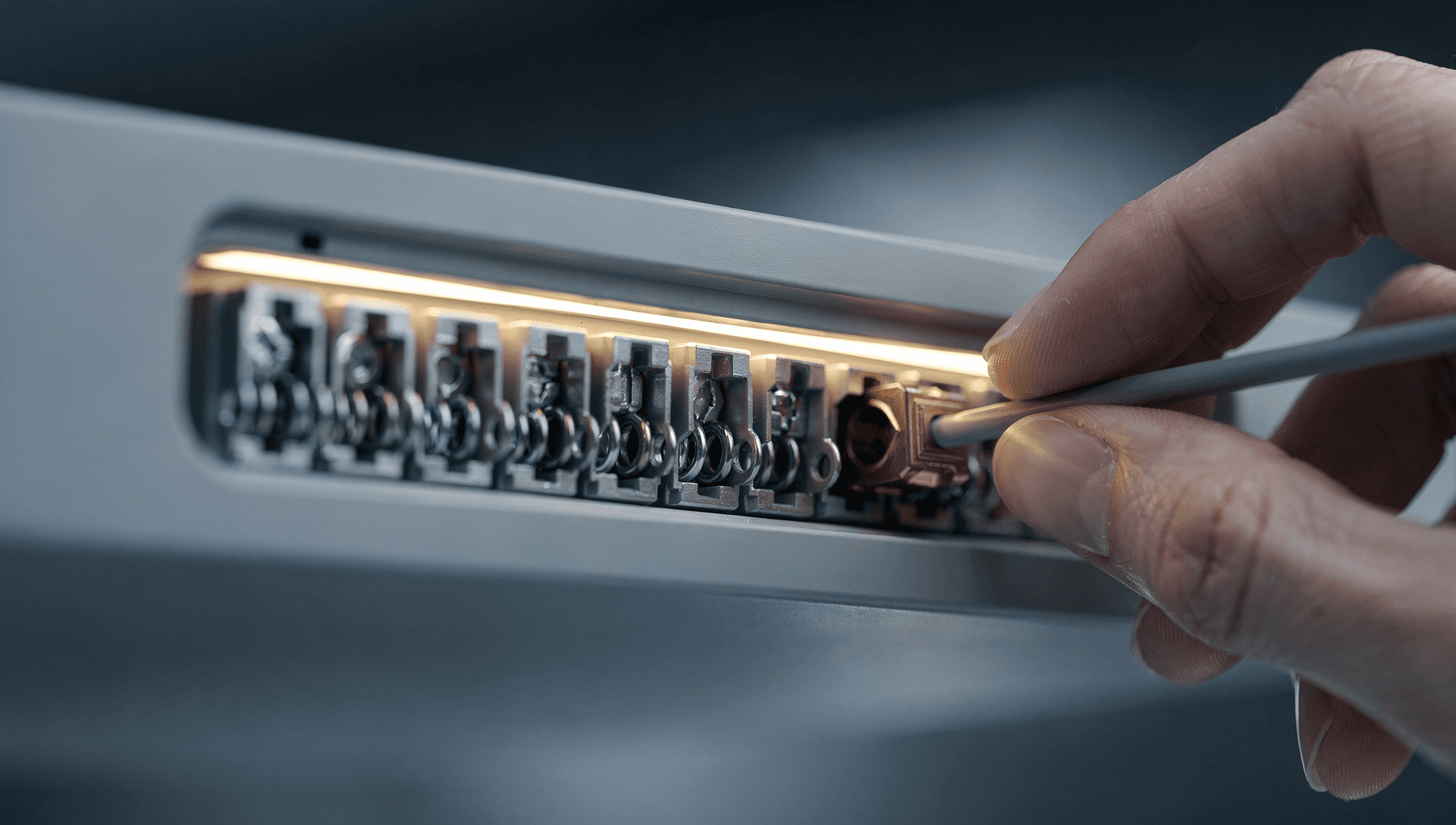
An early-stage hardware venture holds something rare in the electrical trade: a granted utility patent on a genuinely different way to wire a building. Its plug-and-play system turns the century-old ritual of stripping, routing, and hand-terminating conductors into a direct-connect assembly. The invention is real, it is protected, and its prototypes work.
That is exactly the position where good hardware companies stall. An investor can see the product. What they cannot see, and what they diligence hardest, is the operation that turns a working prototype into a certified, manufacturable product at volume. Can you build this repeatedly, to code, at a cost that holds, through a certification gate, into a market defended by entrenched incumbents? A patent does not answer that question. An operation does.
Garrett Partridge entered in an advisory capacity, as Strategic Advisor and COO-Designate, to help close that gap. The work is not to improve the invention. It is to help the founder ready the operation a hardware scale-up is funded and judged on: evaluating the operation itself, positioning the technology within New England's defense and advanced-manufacturing corridors, and aligning the company for pre-funding diligence. This is the Investor Readiness engagement, and the hardware in front of it happens to be electrical rather than a defense sensor. The operator's discipline is the same.
Pre-market engagement. The system is at working-prototype stage with UL certification as the primary remaining gate. The performance figures in this study are from prototype testing and the venture's internal modeling, not field results from a certified, shipping product.
The challenge: a century-old install process in a $270B+ industry
For more than a hundred years, electrical installation has barely changed: strip the wire, route it by hand, terminate it, and repeat that hundreds or thousands of times per building. It is one of the last major construction trades still run on manual craft, and the economics of that craft are under strain.
The pressure is concrete. Skilled electricians are in short supply and the shortage is worsening. Copper is expensive and manual routing wastes it. Codes grow more complex. And a single breaker panel can absorb 8 to 10 hours of a licensed electrician's time before a device is ever installed. Those hours land on a construction schedule that developers are under pressure to compress, so slow electrical work delays revenue on the whole project.
This plays out inside a roughly $270 to $280 billion U.S. electrical construction and supply industry, consistent with independent estimates for U.S. electrical contracting. A large, slow, labor-bound market carrying three cost centers at once, labor, time, and materials, addressed so far by tools that chip at the edges. That gap between the size of the market and the age of the method is what makes it a candidate for a structural change rather than another incremental product.
The solution: a patent-protected plug-and-play architecture
The system replaces internal wiring complexity with a direct-connect architecture across three patented core components, so the installer seats parts together instead of building each connection by hand.
The gang box terminates wiring at the box rather than the device, so outlets and switches seat directly with no exposed conductors. This is the largest and least popular share of jobsite electrical work, and it is where the biggest labor reduction is projected to land. The breaker accepts hot, neutral, and ground directly, eliminating internal panel routing and reducing wiring to a single insertion step. The breaker panel relocates its buses beneath the breakers so each breaker connects directly to all buses, turning the whole panel into a pre-routed, modular assembly. Across all three, spring-loaded quick-connect terminals and integrated safety shutters seat conductors without exposed metal, so installation and later live maintenance are safer as well as faster.
All three are protected under a single granted U.S. utility patent, and the venture holds a system-level IP position extending across more than 20 additional filings on the same plug-and-play principle. The defensibility is not in any one device. It sits in the interdependent system design, which is what creates ecosystem lock-in once a builder adopts one component. The clearest analogy is PEX and SharkBite in plumbing: not a better pipe, but a different, faster, mechanical way to assemble the whole system.
The moat is the system, not the part. A granted utility patent covers all three cores, and once one component is adopted on a jobsite, the rest integrate as one architecture rather than competing part by part.
The operational impact
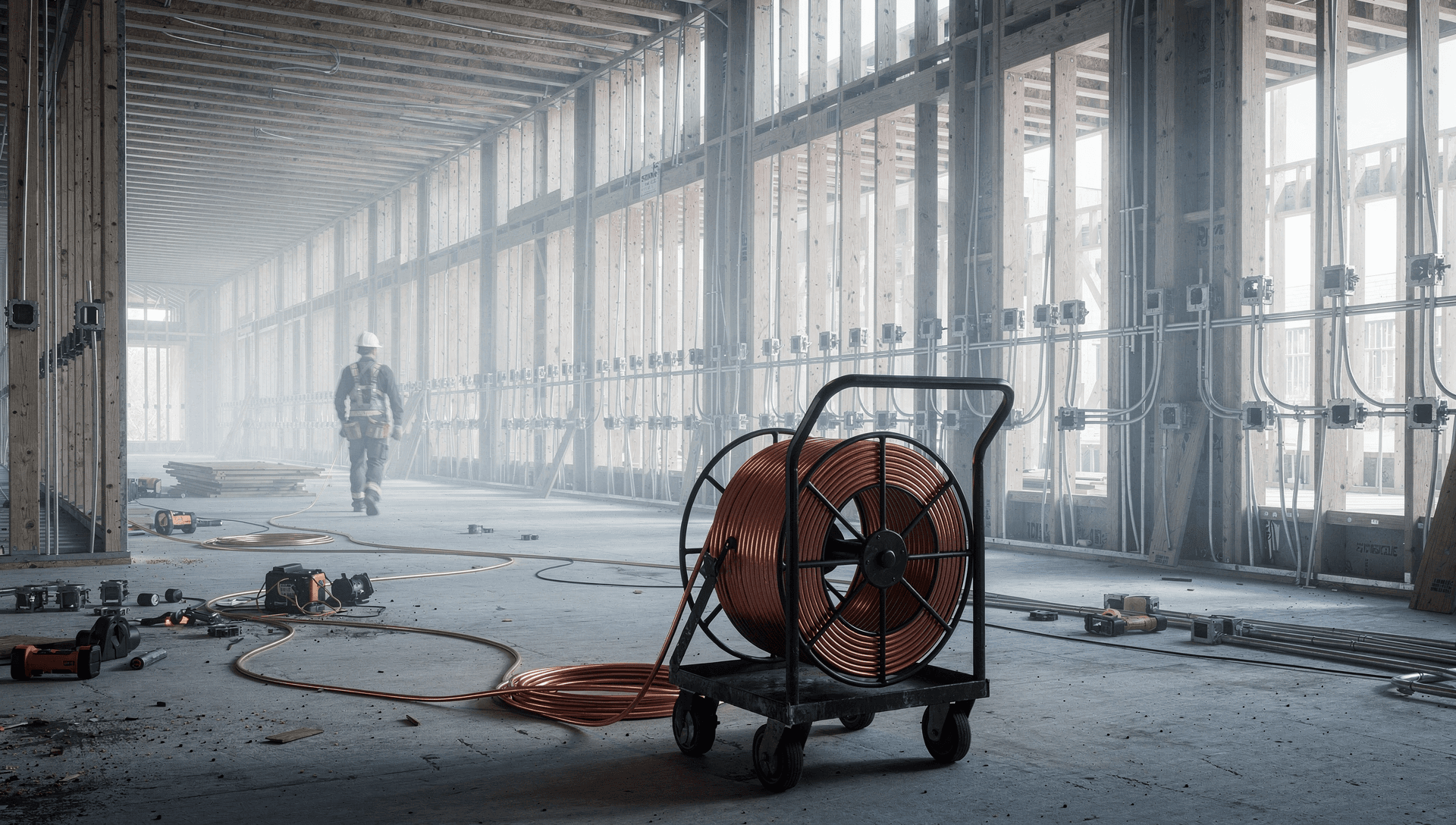
The system is designed to attack labor, time, and materials at once, which is the combination that makes adoption an economic decision rather than a preference. Contractors would complete more jobs per month at higher margin, and builders would realize revenue sooner because electrical work stops gating the schedule. The figures below are the system's prototype-tested and internally modeled performance targets, stated as such. They are not field results from a certified, shipping product.
- 8 to 10 times faster component installation across the system.
- Breaker-panel install projected from 8 to 10 hours down to roughly one hour.
- More than a 50 percent reduction in total jobsite electrical labor across a full build.
- About a 20 percent reduction in copper routing waste, because eliminated routing eliminates waste.
- Spring-loaded quick-connect terminals and safety shutters remove exposed conductors: safer installs, lower error rates, easier inspection, and safer live maintenance.
When the faster method is also the cheaper and safer one, the contractor and the builder each choose it for their own reasons. That is the difference between a product people might try and one the economics pull into use.
The advisory role: operational evaluation, technology positioning, and pre-funding alignment
Garrett Partridge serves as Strategic Advisor and COO-Designate to the venture. In that advisory capacity the work runs along three lines, each aimed at a specific thing an investor or a market will test. The invention and its IP are the founder's; what the operator adds is the read on whether the company can build it at scale.
- Operational evaluation. Assessing what it takes to carry the system from a working prototype to a certified, manufacturable product: the prototype-to-production questions, the unit and cost assumptions, and an honest read on what still has to be built before a raise opens. That operational read is where an operator earns his seat next to a strong invention.
- Technology positioning. Situating the system within New England's defense and advanced-manufacturing corridors, where the certification discipline, supply base, and buyer relationships a hardware scale-up needs already concentrate. It is the same corridor an allied defense-hardware founder onshores into, read here for an electrical system.
- Pre-funding alignment. Readying the company's operating structure for the diligence a technical investor runs before funding a hardware scale-up: ordering the certification path with UL as the primary gate, the tooling and manufacturing setup, and the go-to-market, so capital is spent against milestones rather than all at once and the operational data room is ready when the round opens.
The invention proves the product can work. The advisory work helps the founder prove the company can build it, so the first can be funded.
What this collaboration changes, in practice
Read the three advisory lines as one system and the logic is clear. Operational evaluation asks whether the company can build the system at volume. Technology positioning places it in the corridor where a hardware scale-up finds its certification path, supply base, and buyers. Pre-funding alignment readies the operating structure for the diligence that decides the raise. Together they help turn a patented invention into an operation an investor can underwrite and a builder can adopt.
The engagement is pre-market. The system is at working-prototype stage, reviewed favorably by electricians, engineers, and builders, with UL certification as the primary remaining gate before a certified commercial launch. Among those who have evaluated it is one of the largest builders in the United States, which reviewed the system and expressed interest. The performance figures here are prototype and internal-modeling targets, framed as such, and this study will be updated as the product clears certification and reaches the field.
This is the operator's contribution to a hard-tech company, in an advisory capacity, and it does not depend on the hardware being electrical. The same prototype-to-scale operational read and corridor positioning apply whether the product is a defense sensor onshoring into New England or a plug-and-play electrical system. The engagement model behind it is Investor Readiness, and the method behind every engagement is Standard Work 2.0™.
Frequently asked
Direct answers.
What is Garrett Partridge's role with the venture?
Garrett serves as Strategic Advisor and COO-Designate. In that advisory capacity he assists the founder with operational evaluation, what it takes to move the system from working prototype to a certified, manufacturable product; technology positioning within New England's defense and advanced-manufacturing corridors; and pre-funding alignment, readying the operating structure for the diligence a technical investor runs before a hardware raise. The invention and its IP are the client's. The operational read that helps make it fundable is the advisory contribution.
What is the plug-and-play electrical system?
It is a patent-protected, plug-and-play electrical system from an early-stage hardware venture, covered by a granted U.S. utility patent. It replaces manual, hand-wired installation with a direct-connect architecture across three patented core components: a gang box that terminates wiring at the box, a breaker that accepts hot, neutral, and ground directly, and a breaker panel with buses pre-routed beneath the breakers. Devices and conductors seat together instead of being wired by hand, with spring-loaded quick-connect terminals and safety shutters removing exposed conductors, the same mechanical shift PEX and SharkBite brought to plumbing.
How much faster is installation, and how solid are these numbers?
In prototype testing and the venture's internal modeling, the system is engineered to install components 8 to 10 times faster, take a breaker-panel install from 8 to 10 hours to roughly one hour, cut total jobsite electrical labor by more than half, and reduce copper routing waste by about 20 percent. These are prototype and modeled targets, stated as such: the system is pre-market, with UL certification as the primary remaining gate. They are not field results from a certified, shipping product, and this study will be restated as the product reaches the field.
Why does a hardware inventor need an operations advisor?
Because a patent proves the product can work, and an investor funds the company that can build it. Technical investors diligence the operation hardest: the prototype-to-production plan, the cost curve, the certification path, the supply and capacity assumptions, and the honest read on what still has to be built. Most hardware startups can show the product and cannot produce that operational read. Bringing an operator in to build it, before the raise opens, is what turns a validated invention into a fundable company, and it is the Investor Readiness engagement this collaboration runs under. It is the same work whether the hardware is an electrical system or a defense sensor.
Is the system on the market yet?
Not yet. The system is at working-prototype stage, with a fully functional breaker-panel prototype and beta prototypes of the breaker and gang box, reviewed favorably by electricians, engineers, and builders, including one of the largest builders in the United States, which evaluated the system and expressed interest. UL certification is the primary remaining gate before a certified commercial launch, with simpler product lines able to launch earlier on shorter certification paths. The advisory work described here, operational evaluation, corridor positioning, and pre-funding alignment, is built to help carry it through that gate and into the market.
Sources
- 1. Arizton, U.S. Electrical Contractors Market, an independent estimate of the U.S. electrical construction market size
- 2. Standard Work 2.0, the operating method behind every engagement
- 3. Investor Readiness, the engagement model this collaboration ran under
- 4. Case Study: Standard Work 2.0™ at a Defense ATE Contract Manufacturer
Take this with you
Download the print-ready PDF for the boardroom, or put this in front of an operator directly.